
When generative AI first entered the corporate mainstream, it was almost entirely synonymous with text. Large Language Models (LLMs) dominated the conversation, transforming how enterprises drafted emails, wrote code, and summarized documents.
However, as we move through 2026, the true frontier of the generative revolution has shifted. The most significant business value is no longer found just in generating text, but in multimodal visual autonomy. Enterprises are rapidly integrating generative image, video, and computer vision models into their core operations, turning abstract data into high-fidelity visual assets and actionable physical insights.
To understand the business impact of this shift, we must look at how these visual modalities function in the real world.
The Expansion of Modalities
Generative AI is no longer a monolithic concept. It is a diverse ecosystem of specialized models, each designed to tackle complex visual and spatial challenges:
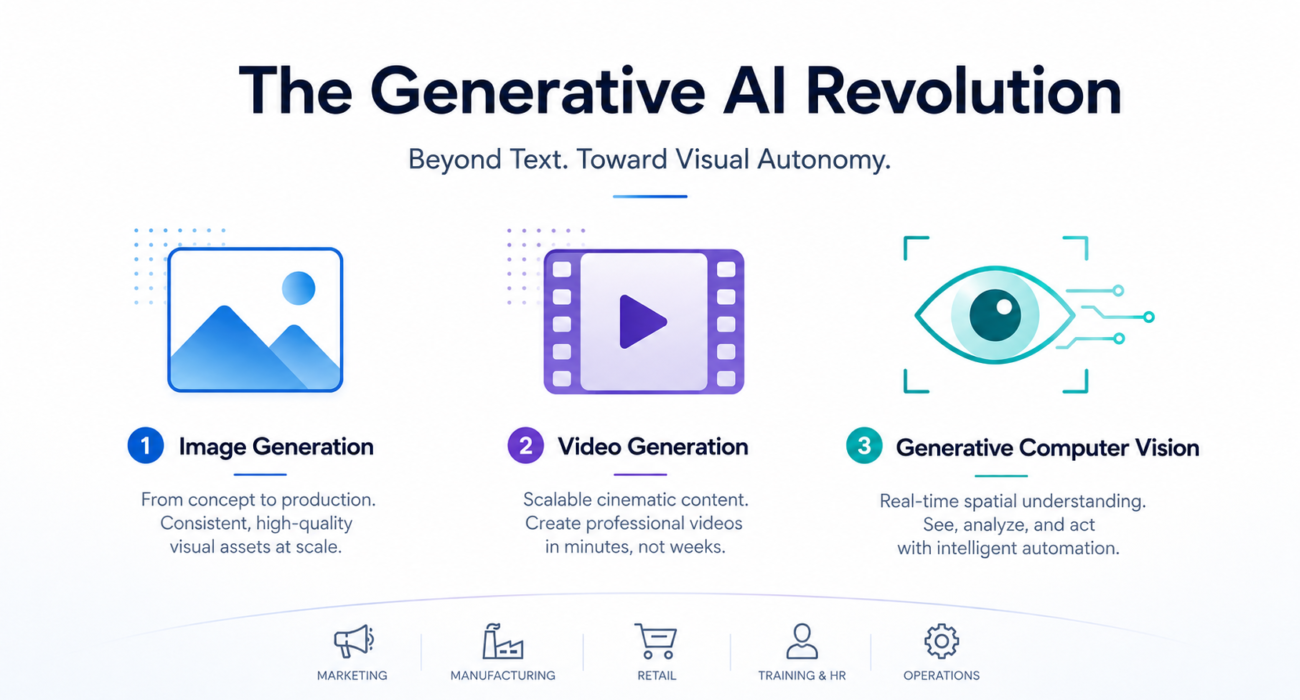
1. Image Generation: From Concept to Production
Early image generation tools were treated as novelties, often producing inconsistent or stylized results. Today, enterprise-grade image generation is defined by absolute control and photorealism. Businesses use these models to generate high-resolution marketing assets, localized product mockups, and synthetic data without the need for expensive photoshoots. The focus has shifted from “creating a picture” to ensuring strict brand consistency across thousands of AI-generated assets.
2. Video Generation: Scalable Cinematic Content
The leap from static images to generative video is perhaps the most impressive technical achievement of the last two years. The enterprise impact here is massive. Instead of spending weeks and tens of thousands of dollars on studio production, companies are using text-to-video models to generate scalable, consistent corporate communications, personalized sales outreach videos, and dynamic localized commercials directly from their browsers.
3. Generative Computer Vision: Real-Time Spatial Understanding
While image and video models create visual data, generative computer vision interprets it. By combining generative neural networks with optical sensors, enterprises can deploy autonomous agents that “see.” These models don’t just recognize a broken part on an assembly line; they generate an immediate predictive analysis of the failure, cross-reference it with the supply chain, and autonomously recommend a solution.
The Cross-Domain Business Impact
The integration of these visual modalities is driving unprecedented operational efficiency across various industries:
- In Marketing & Advertising: Global brands are deploying generative image and video models to create hyper-personalized, localized ad campaigns. A single product prompt can generate hundreds of video variations, tailored to the specific demographics and languages of different global markets, slashing production costs by up to 90%.
- In Manufacturing & Quality Control: Generative computer vision is revolutionizing the factory floor. By generating synthetic visual data—essentially teaching AI what a defect looks like without needing thousands of real-world examples—manufacturers can instantly deploy highly accurate visual inspection systems that operate 24/7 without fatigue.
- In Corporate Training & HR: Human Resources departments are utilizing video generation to create dynamic, easily updatable onboarding modules. Instead of re-shooting a training video every time a company policy changes, the script is simply updated, and the AI generates a new, flawless video presentation in minutes.
The Shift to Strategic Usability
The “wow factor” of generative AI has officially worn off. In 2026, enterprise boards are no longer impressed by isolated pilot projects or flashy technical demonstrations.
The mandate now is usability and integration. The organizations realizing the highest ROI from generative AI are those treating visual and text models not as disconnected tools, but as a unified, governed infrastructure. By embedding these generative modalities directly into their existing CRM, ERP, and production pipelines, businesses are unlocking a new era of automated creativity and operational scale.