
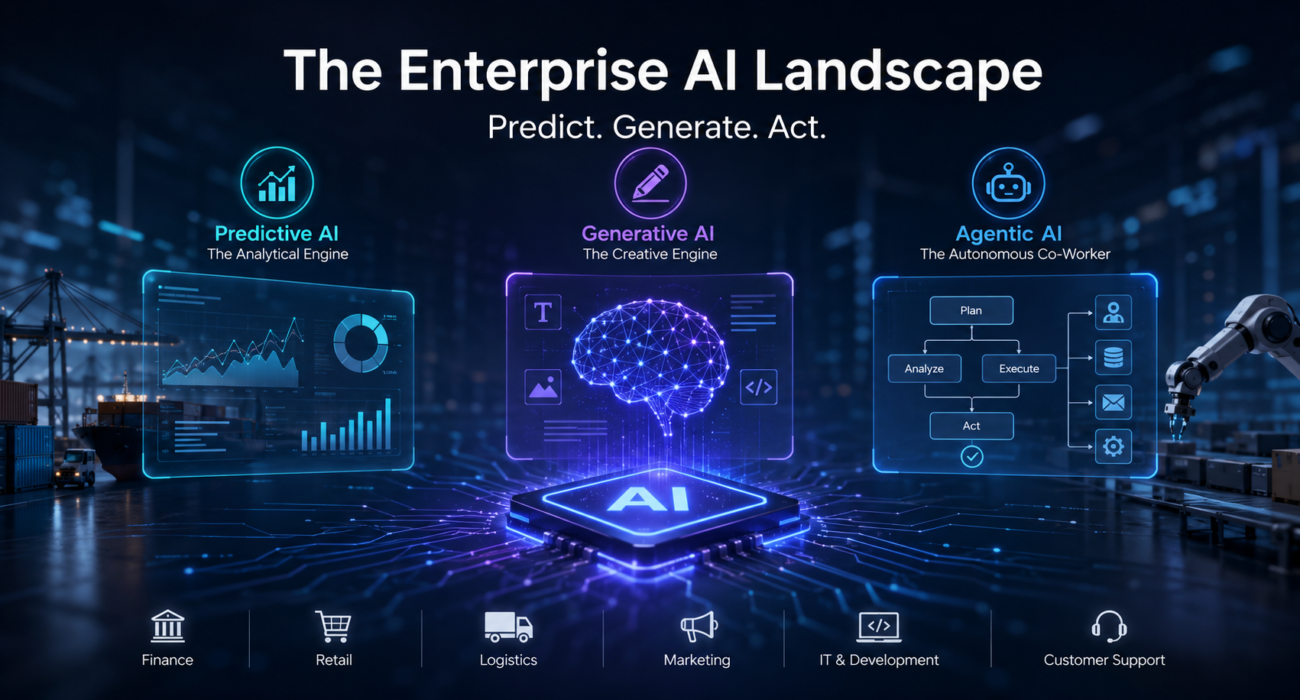
For modern business leaders and technologists, navigating the landscape of Artificial Intelligence often feels like wading through a sea of buzzwords. Every software vendor claims to have an “AI-powered” solution, but without a clear understanding of how these systems actually work—and what they are fundamentally capable of—enterprises risk misaligning their technology investments with their business goals.
To successfully deploy AI, we must first demystify it. This requires breaking down AI into distinct categories based on capability and functionality.
The Evolution of Capability: Narrow to Superintelligence
When computer scientists discuss AI, they generally categorize it into three theoretical stages of evolution:
- Artificial Narrow Intelligence (ANI): Often referred to as “Weak AI,” this is the only form of AI that exists today. Despite the term “weak,” these systems are incredibly powerful. ANI is designed to perform a specific, predefined task—such as playing chess, driving a car, or generating text—with extreme proficiency. All modern enterprise tools, from recommendation engines to advanced language models, fall into this category.
- Artificial General Intelligence (AGI): This is the theoretical stage where a machine possesses the ability to understand, learn, and apply knowledge across a vast array of diverse tasks, matching human cognitive abilities. While research is accelerating, AGI remains in the realm of the future.
- Artificial Superintelligence (ASI): A theoretical state where machines surpass human intelligence and capability across every conceivable field, from scientific creativity to social intelligence.
The Cross-Domain Impact: How AI Functions in Business
While theoretical capabilities are fascinating, the enterprise is primarily concerned with how AI affects the bottom line. In the modern tech stack, AI generally operates across three functional lanes, fundamentally transforming how different industry domains operate:
1. Predictive AI: The Analytical Engine
Predictive AI works by analyzing vast amounts of historical data to identify hidden patterns and forecast future outcomes. It does not create new things; it interprets the past to secure the future.
- In Finance: Algorithms assess credit risk in milliseconds and flag fraudulent transactions before they process.
- In Logistics & Retail: Predictive models anticipate supply chain disruptions and forecast inventory demand based on micro-economic shifts, ensuring warehouses are stocked efficiently.
2. Generative AI: The Creative Engine
Instead of just analyzing data, Generative AI uses complex neural networks to create entirely new, original content—from text to software code.
- In Marketing & Sales: It enables hyper-personalized, at-scale content creation, instantly drafting tailored emails, pitch decks, and ad copy for individual customer segments.
- In Software Development & IT: Generative AI acts as a pair-programmer, accelerating code generation, automating tedious debugging, and radically reducing time-to-market for digital products.
3. Agentic AI: The Autonomous Co-Worker
The most significant trend reshaping the enterprise is Agentic AI. While Generative AI waits for a human prompt, Agentic AI reasons, plans, and executes multi-step workflows autonomously.
- In Customer Support: Autonomous agents don’t just answer FAQs; they log into the CRM, process refunds, and update shipping details without human intervention.
- In Operations: An AI agent can analyze an incoming vendor invoice, cross-reference it against the ERP system, reconcile the account, and authorize payment automatically.
The Key to Enterprise Integration
The most common cause of failure in enterprise AI initiatives is “misalignment”—applying the wrong type of AI to a specific business problem. You cannot expect a predictive logistics tool to write a marketing brief, nor can you expect a generative language model to perfectly balance a complex financial ledger.
Success requires treating AI not as a standalone software purchase, but as foundational business infrastructure. The organizations that win the next decade will be those that deeply understand these distinct AI categories, integrate them securely into their specific industry workflows, and deploy the right tool for the exact right task.